

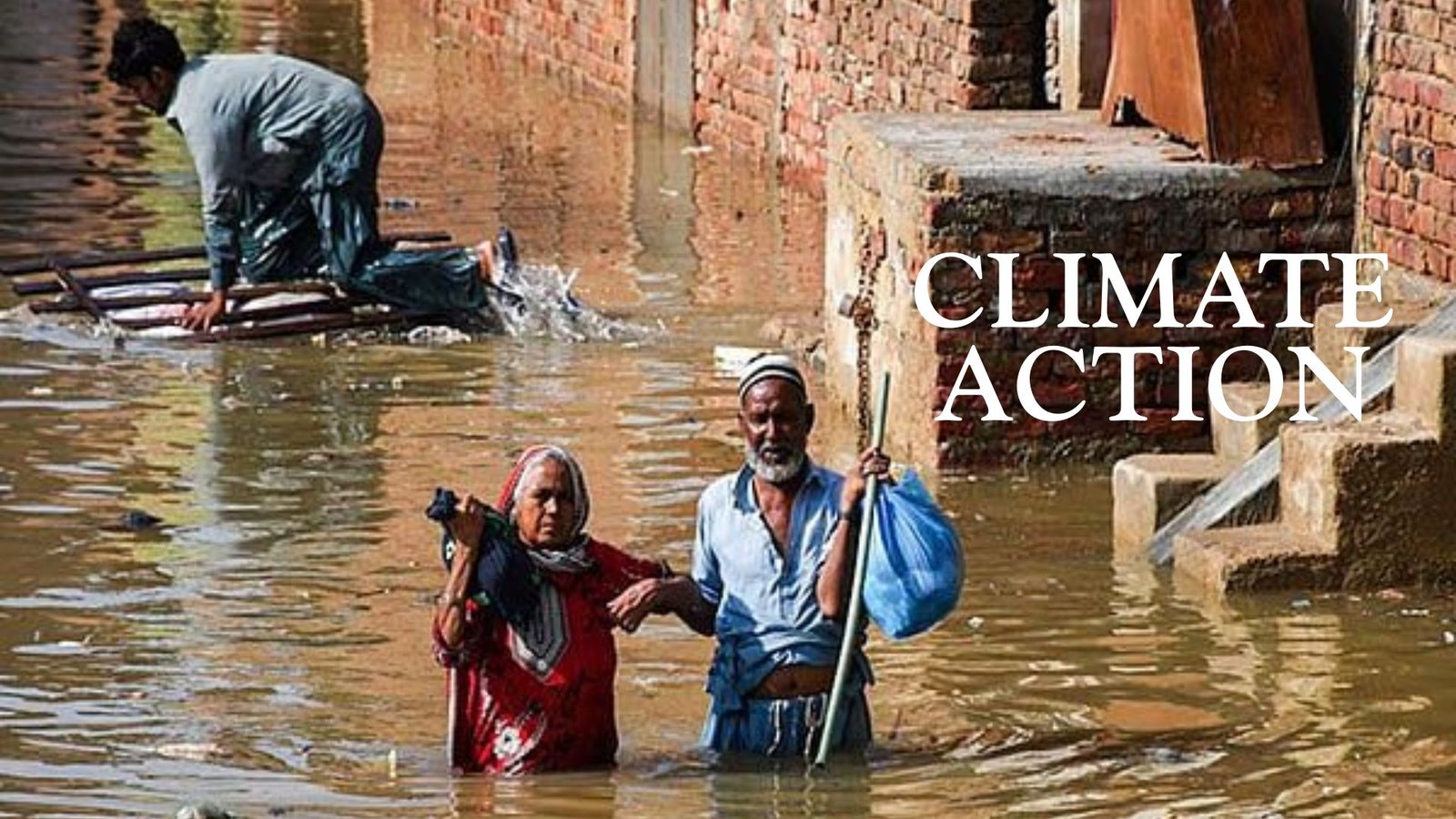
Climate change is one of the defining challenges of our time. DICE supports policies and initiatives that strengthen environmental protection, climate resilience, sustainable energy transitions, and responsible stewardship of natural resources.
Despite contributing less than one percent of global greenhouse gas emissions, Pakistan remains among the countries most exposed to the consequences of climate change. Its diverse geography—spanning fragile glacial ecosystems, fertile river plains, and densely populated urban centers—makes the country particularly susceptible to environmental disruption. Rising temperatures, accelerated glacial melt in the Himalayas and Karakoram ranges, increasingly erratic monsoon cycles, devastating floods, prolonged droughts, and worsening urban air pollution are already reshaping Pakistan’s environmental and economic landscape. These pressures place significant strain on agriculture, water availability, infrastructure, and public health, demonstrating how climate change has evolved from an environmental concern into a central challenge for national development.
One of the most immediate manifestations of this crisis is deteriorating air quality in major cities. Prolonged exposure to hazardous levels of particulate pollution contributes to thousands of premature deaths each year and has been shown to reduce life expectancy in several regions of the country. Environmental degradation therefore intersects directly with human health, economic productivity, and social stability. Climate-related disruptions also increase public expenditure on disaster recovery, damage infrastructure, and intensify socioeconomic inequalities, as vulnerable communities—particularly those dependent on agriculture and natural resources—face disproportionate risks. Climate change, in this context, cannot be viewed solely as an ecological issue; it is equally a matter of governance, economic management, urban planning, and long-term human development.
Recognizing the scale and complexity of these challenges, The DICE Forum places climate action at the center of its development framework, aligning its approach with the United Nations Sustainable Development Goals. Its initiatives contribute directly to SDG 3 (Good Health and Well-being), SDG 7 (Affordable and Clean Energy), SDG 11 (Sustainable Cities and Communities), SDG 12 (Responsible Consumption and Production), and SDG 13 (Climate Action). Through policy dialogue, research collaboration, and partnerships across government, academia, and industry, DICE seeks to encourage sustainable environmental governance and responsible economic growth. In doing so, climate action is framed not simply as environmental protection, but as a pathway to safeguarding public health, strengthening economic stability, and ensuring sustainable development for future generations.
Strategic Role of DICE in Climate Action
DICE promotes climate action through:
• Policy dialogue on environmental governance
• Research on climate resilience and sustainability
• Partnerships supporting renewable energy and green innovation
• Public awareness initiatives on environmental responsibility
Through these efforts, DICE seeks to support Pakistan’s transition from climate vulnerability to climate steadfastness.